
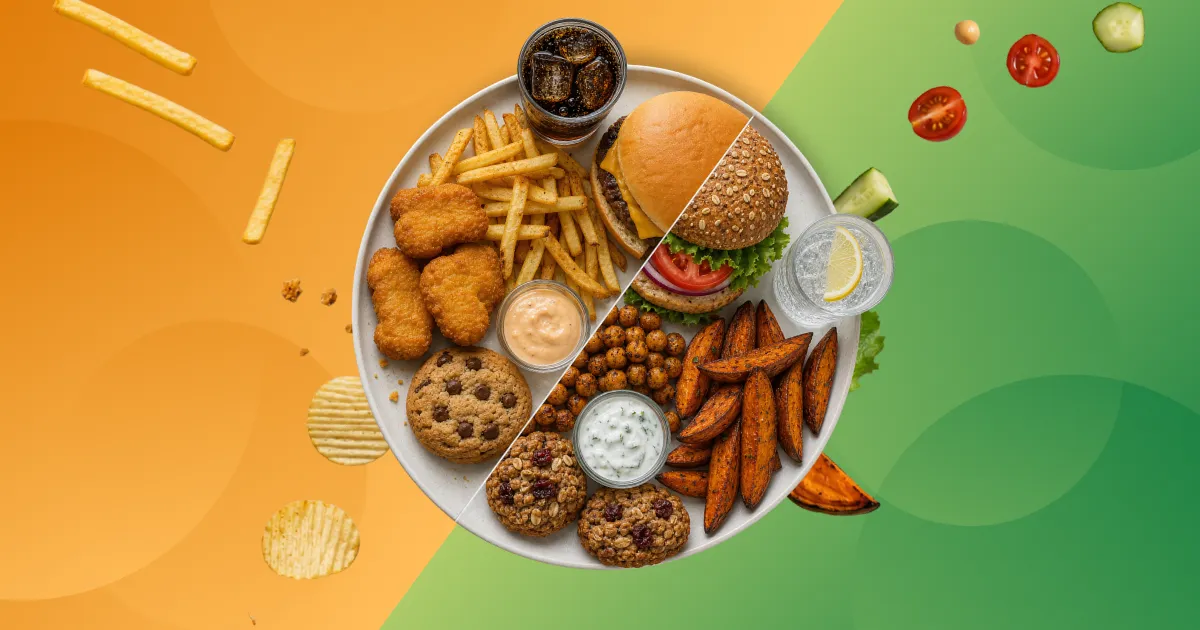
AI-generated meals landed 47% closer to nutritional targets than their real-world counterparts.
A peer-reviewed study published in PLOS Digital Health, titled “Translating dietary standards into healthy meals with few-ingredient substitutions” shows that one to three targeted ingredient swaps, identified by AI, can improve a meal’s nutritional quality by 10% and reduce its cost by up to 34%. The meals stay recognizable and the changes are small enough to stick.
The study, led by UC Davis scientist Trevor Chan and Ilias Tagkopoulos, used data from 135,491 real meals logged by over 55,000 U.S. adults. Rather than designing ideal plates from scratch, the AI model learned from what people already eat: cereal bowls, sandwiches, rice dishes and found the fewest substitutions needed to bring each meal closer to USDA dietary guidelines. AI-generated meals landed 47% closer to nutritional targets than their real-world counterparts.
The most effective swaps were straightforward: whole grains for refined, lean protein or legumes for processed meat, added vegetables where they were missing. A sandwich stays a sandwich. It just works harder.

Why Domain-Specific AI Matters
The study also compared its specialized model against GPT-4o. The general-purpose chatbot produced more varied meals but fell short on the metrics that matter: only 11.9% of GPT-4o’s meals met macronutrient standards, compared to 18.9% for the domain-trained system. GPT-4o tended to skew high in fat and low in carbohydrates. Exactly the kind of drift that makes generic AI unreliable for nutrition work.
In an interview with Nutrition Insight, Ilias Tagkopoulos, PIPA Founder and study co-author emphasized that the goal is not simply to make meals “healthier,” but to make better choices easier:
“The key insight is that healthier eating often starts by identifying the one ingredient or item that is not helping our health and replacing it smartly with an alternative that is functionally better, yet doesn’t sacrifice taste or cost.”
What Comes Next
The research is computational with no real-world user testing yet. The team is now working with school districts, chefs, and public health programs in the U.S. to test whether people accept the swaps, repeat them, and see measurable improvements in diet quality. Tagkopoulos framed that challenge plainly:
“People care about their health but often don’t want to compromise the sensory experience or pay a heavy premium for ingredients that might have better bioactivity or are more nutritious.”
Sources:
- Chan, T. & Tagkopoulos, I. (2026). PLOS Digital Health. https://journals.plos.org/digitalhealth/article?id=10.1371/journal.pdig.0001367
- NutritionInsight: AI tool suggests simple swaps in meal ingredients for healthier and budget-friendly diets
- The Brighter Side of News / AOL: New AI model finds a cheaper path to healthier eating