Know what your product will do before you make it.
Go from trial-and-error, late surprises, and long cycles to predictable outcomes, fewer pilots, and confident scale-up.
 Try FIOS®
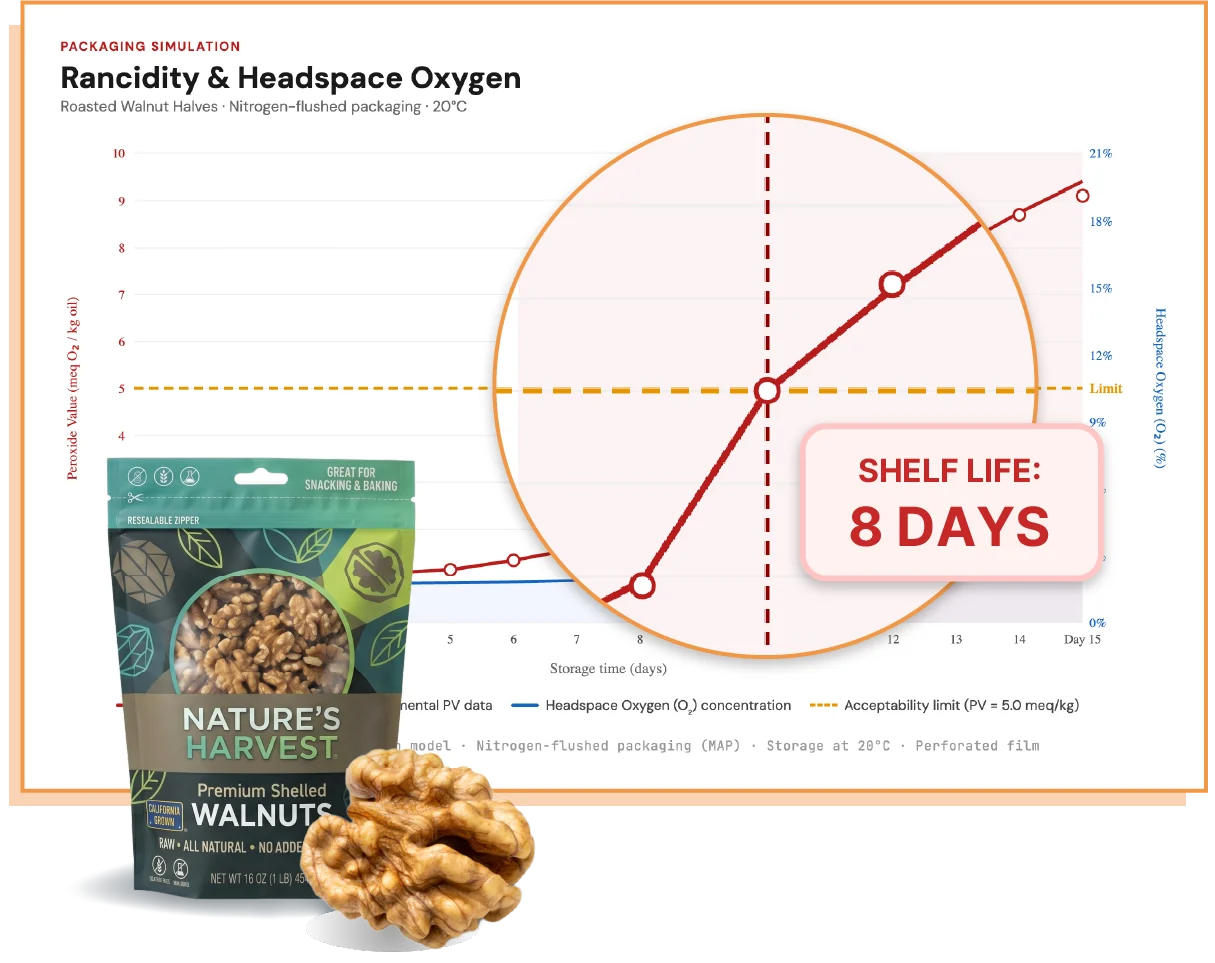
Predict cost, sensory, nutrition, and regulatory risk — simultaneously, before any pilot. Know what your product will do before you make it.
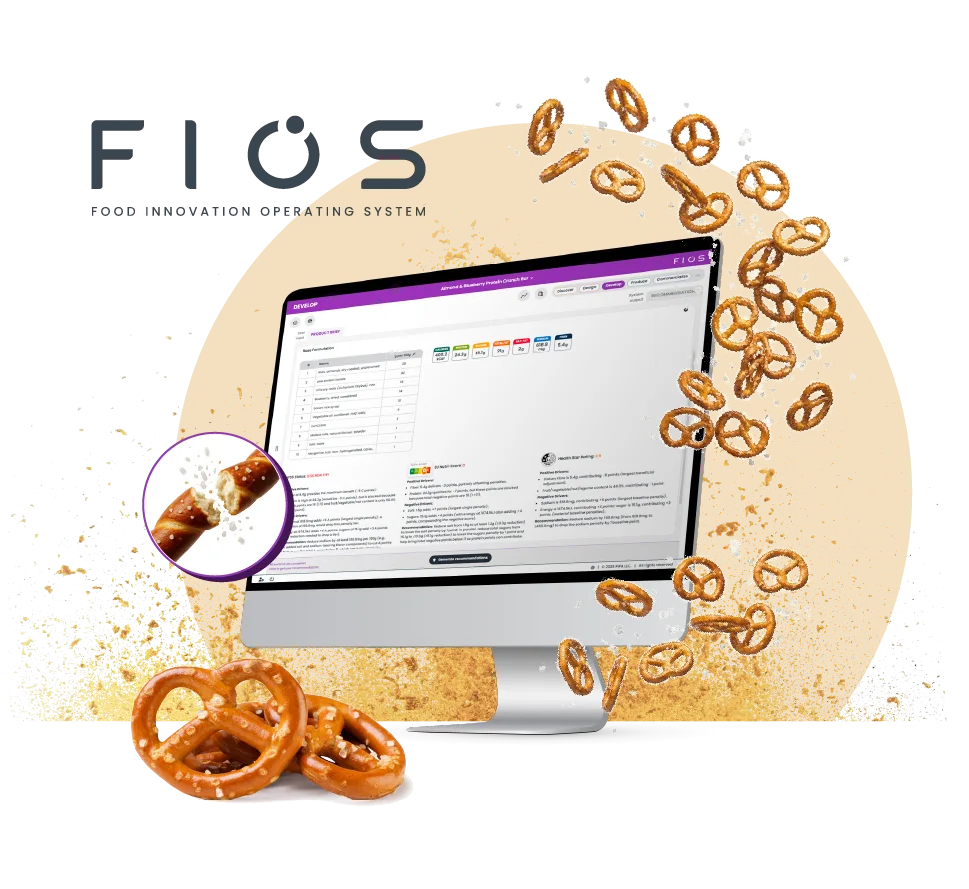
Most formulation failures are visible in the data, just too late. FIOS® moves that visibility to day one, so product decisions are based on what will happen, not what already has.
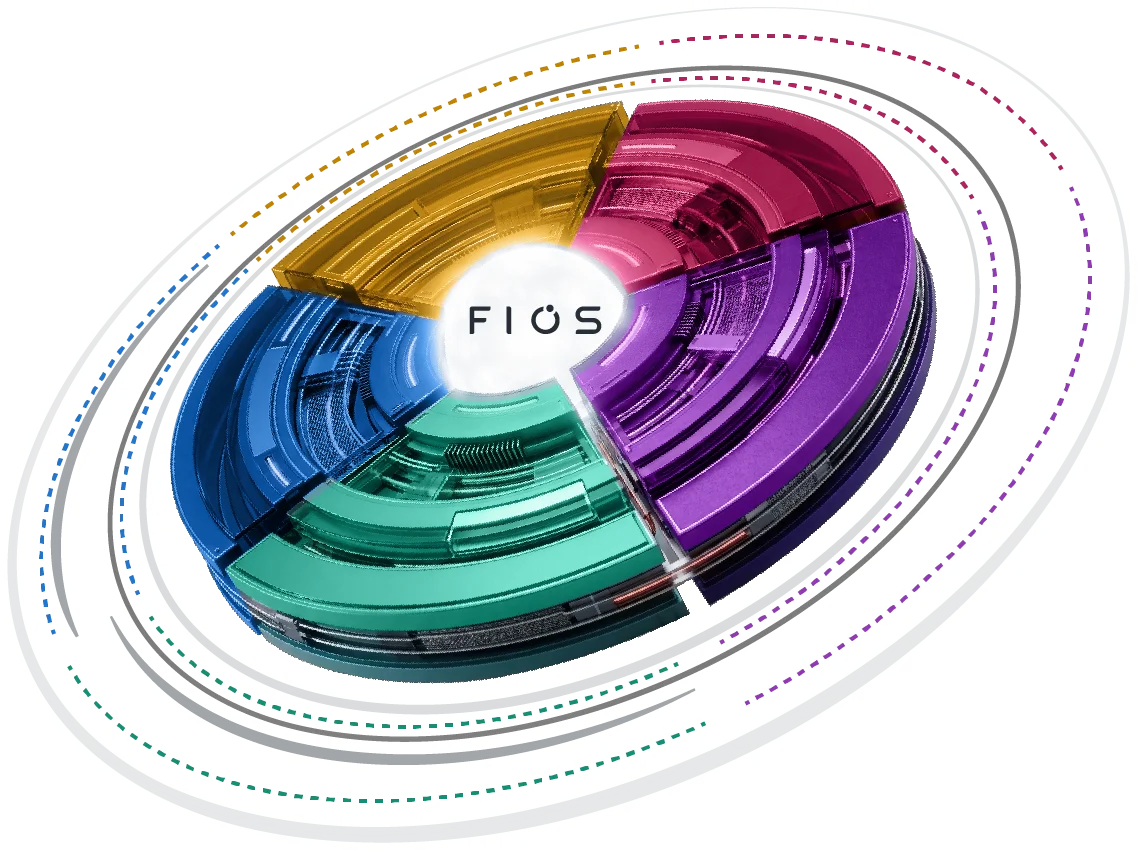 The FIOS® workflow
FIOS® gives R&D, regulatory, and commercial teams one shared way to move products forward, with the same data, the same models, and no silos.


Every account starts with free usage allowance. No credit card required. Get your first formulation recommendation in under 10 minutes.
A first formulation run takes under 10 minutes. The pilot it replaces takes weeks.
FIOS® brings six core capabilities into a single connected workflow. Each is grounded in what global R&D teams told us they needed most.
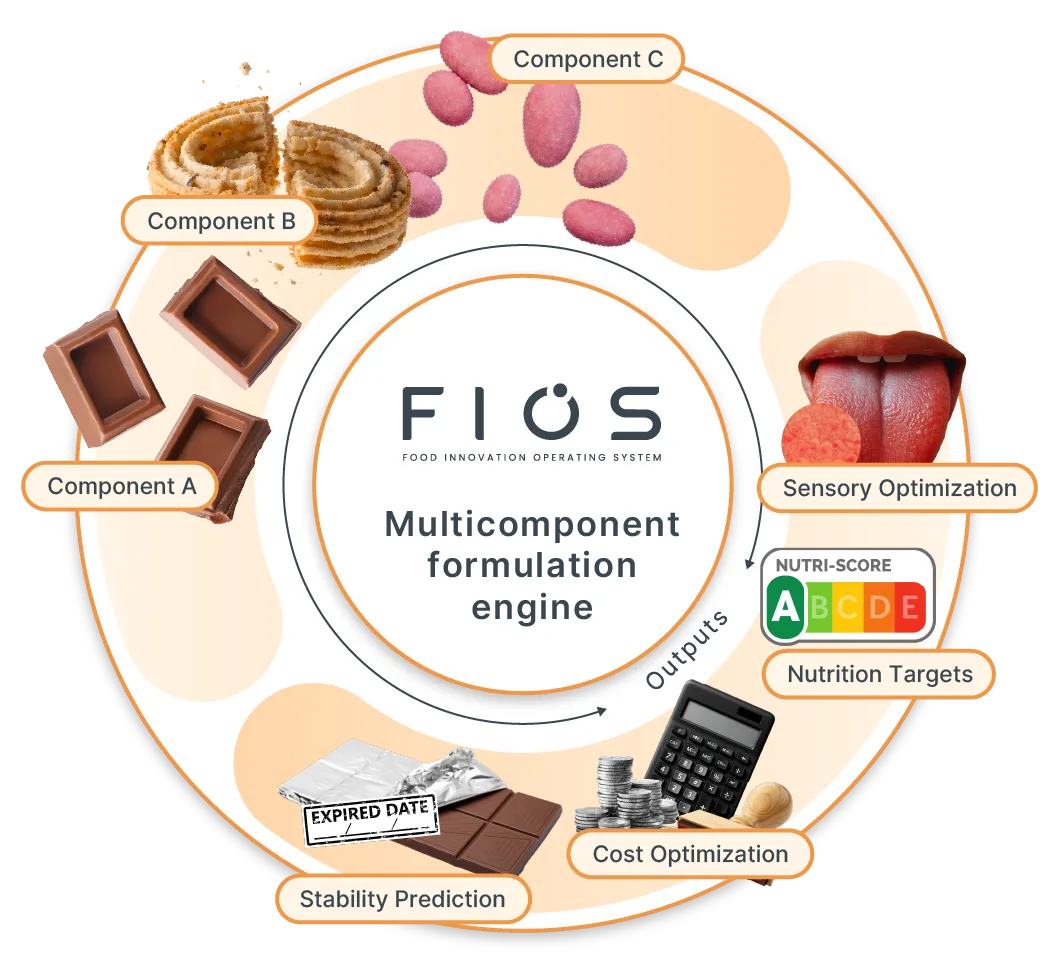
Binder + particulates + coating. Wafer + chocolate + filling. One model.
Most real products are multi-component: a chocolate bar has chocolate, wafer, and filling — each with its own formulation, structure, and water activity. FIOS® models each component and the interactions between them, optimizing the whole product simultaneously for sensory, nutrition, cost, and stability. Water migration between phases. Structural interactions. Scale-up behavior. Modeled together, not in isolation.
"When we make a chocolate bar, we make the chocolate on its own, the wafer, and the filling cream. We need to modulate each of these separately to give the whole nutritional package for the bar."
— Principal Technologist, global confectionery
Formulation decisions inform processing. Processing decisions inform formulation.
Most formulation failures happen at the handoff between R&D and manufacturing — when a recipe that worked in the lab breaks at scale. FIOS® links formulation and process parameters in a single model, so extrusion settings, oven profiles, and fermentation conditions are optimized alongside ingredient choices. The result: fewer pilot failures, faster scale-up, and production runs that behave the way the bench predicted.
Deployments reduce breakage and optimize shape consistency in extruded snacks — linking extrusion parameters to texture outcomes in a single predictive workflow.
— Snack, and bakery manufacturers
Hit your Nutri-Score target while maintaining taste and protecting margin.
Every CPG decision trades off nutrition, sensory, and cost. Reformulate for a lower sugar target and texture shifts. Swap to a cheaper ingredient and flavor profile moves. FIOS® models all three dimensions together — predicting sensory outcomes from composition changes, checking nutrient profiles against Nutri-Score, HSR, and FDA Healthy criteria, and simulating ingredient substitutions with cost and performance deltas side by side.
Used to balance nutritional targets with processability, cost, and sensory quality across international Nutrient Profiling Models for global confectionery and snack portfolios.
— Fortune 500 CPG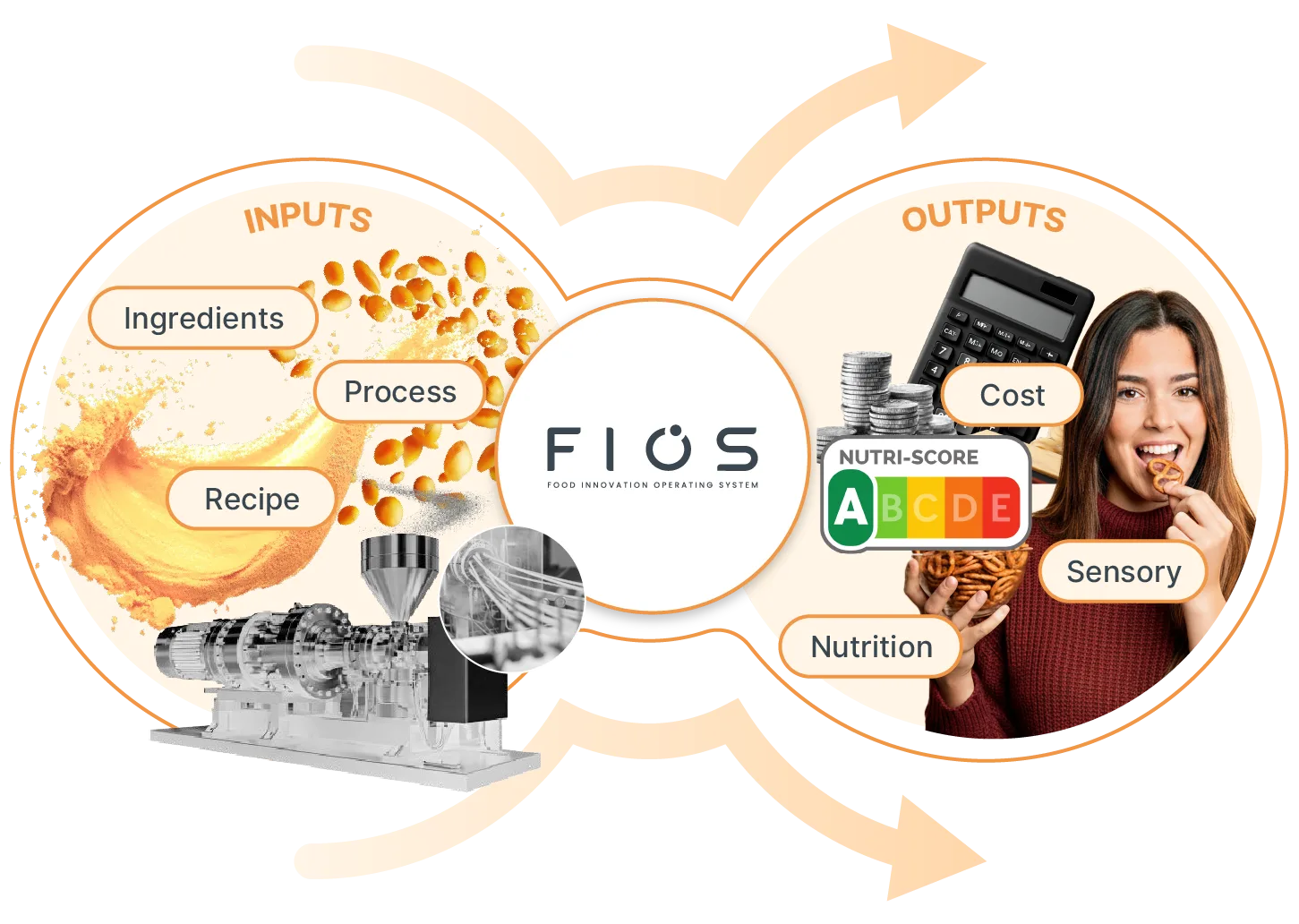
Model key frameworks including Nutri-Score, HSR, FDA and EFSA health claims.
Regulatory surprises are a costly failure point in CPG. When a product passes R&D but fails a regional nutrient profiling model, it can trigger months of rework. FIOS® organizes the evidence your team has assembled into EFSA-structured health claim dossiers and market-specific claim assessments.
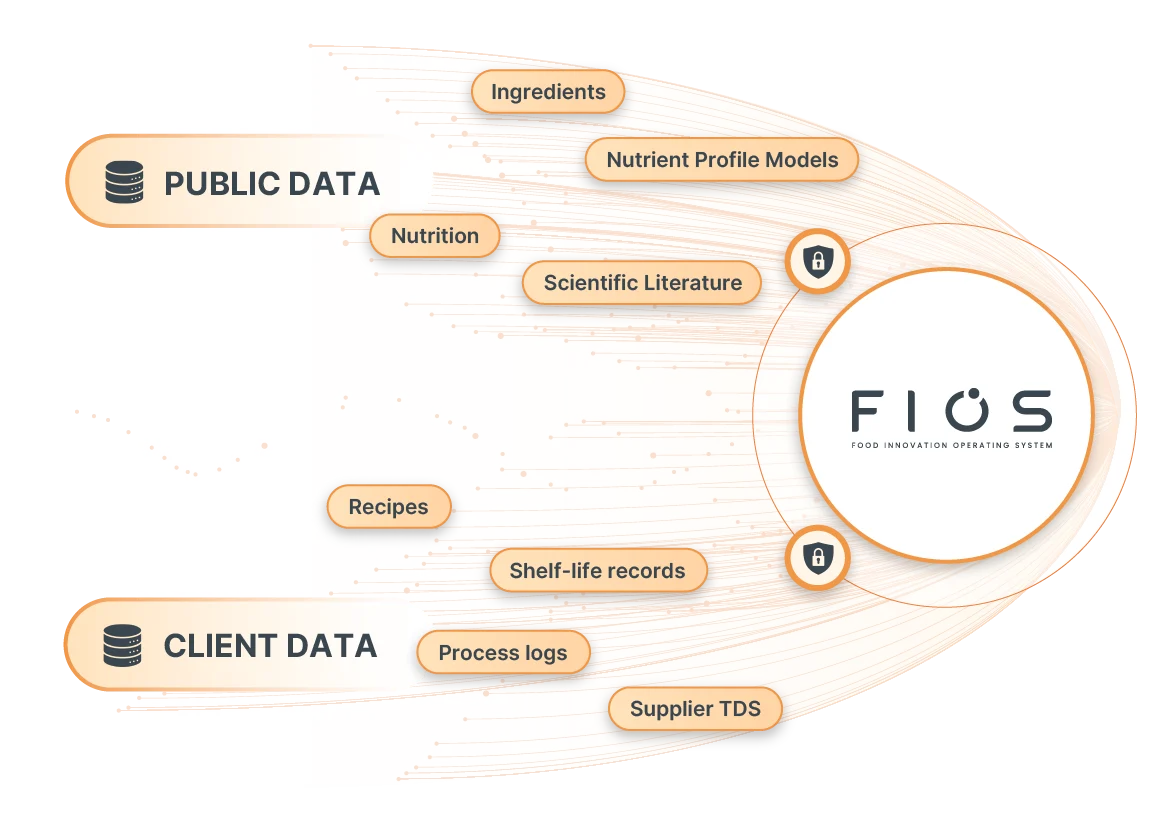
Proprietary recipes, supplier TDS, and production runs, with public data added when it helps.
FIOS® works with the data formats you already use, including recipes in Word, PDF, or Excel, supplier technical data sheets, raw material shelf-life records, and manufacturing process logs. It can also integrate with the PLM systems your team prefers. Your data remains yours. Public data and PIPA’s curated knowledge bases can expand what your team is able to analyze and reason over. They are used together when it adds value, and kept separate when that is the right choice.
Deployed inside enterprise environments at global CPG and ingredient companies — ingesting proprietary recipe databases, and regulatory constraints alongside PIPA's scientific knowledge graph.
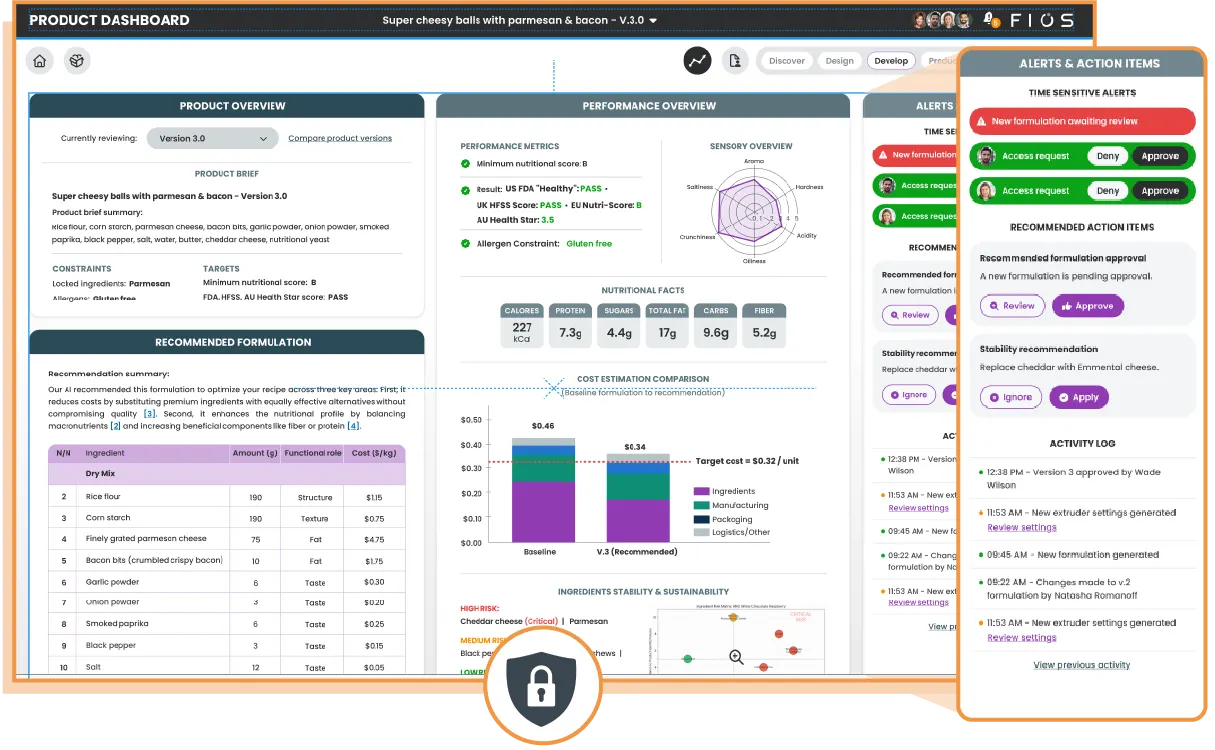
Permissions, project isolation, audit trails, live dashboards.
FIOS® is built for enterprise R&D environments, with role-based access control, project-level permissions, cross-functional workspaces, and live dashboards for different types of users. Every formulation, experiment, and result is versioned. Teams can compare iterations, track changes, and roll back when needed. From bench through manufacturing, FIOS® gives everyone who needs it access to the same source of truth.
Requested by global enterprise R&D teams where R&D, regulatory, and manufacturing span continents and need shared visibility without duplicating work.
Most AI-for-food platforms rely mainly on machine learning. Most simulation platforms rely mainly on physics. FIOS® combines four modeling approaches into a single prediction, helping it solve problems where either approach on its own can fall short.
Pattern recognition across millions of recipes and scientific papers. Learns what works from data humans can't hold in their heads at once.
First-principles simulation for processes such as extrusion, baking, and fermentation, covering heat transfer, mass transfer, phase change, and chemical reactions as connected parts of the same system.
Reaction kinetics, degradation pathways, and omics-level ingredient data show what a formulation is likely to do in practice, not only what goes into it.
Continuously calibrated against real manufacturing runs. Each production batch improves the next prediction.
Off-the-shelf CAE tools are not built for food process complexity, where physics and chemistry are deeply connected. FIOS® builds simulations from first principles and calibrates them against real production data.
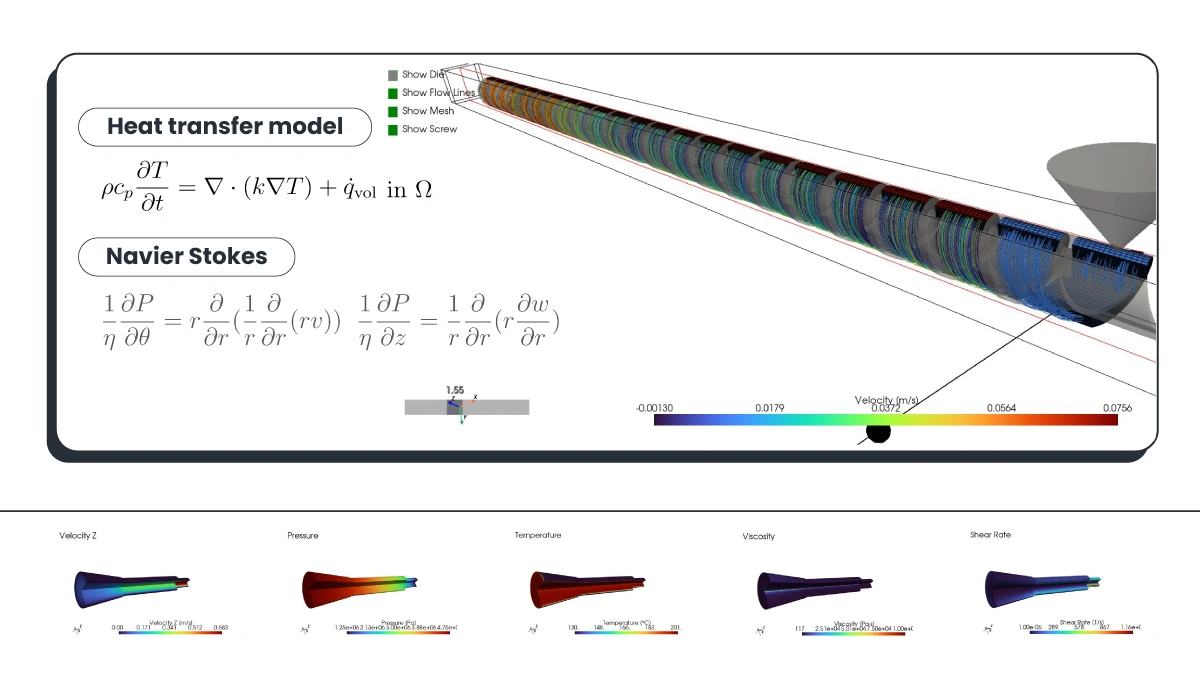
Predicts texture, expansion, and density. Optimizes screw configuration and thermal zones before committing to a run.
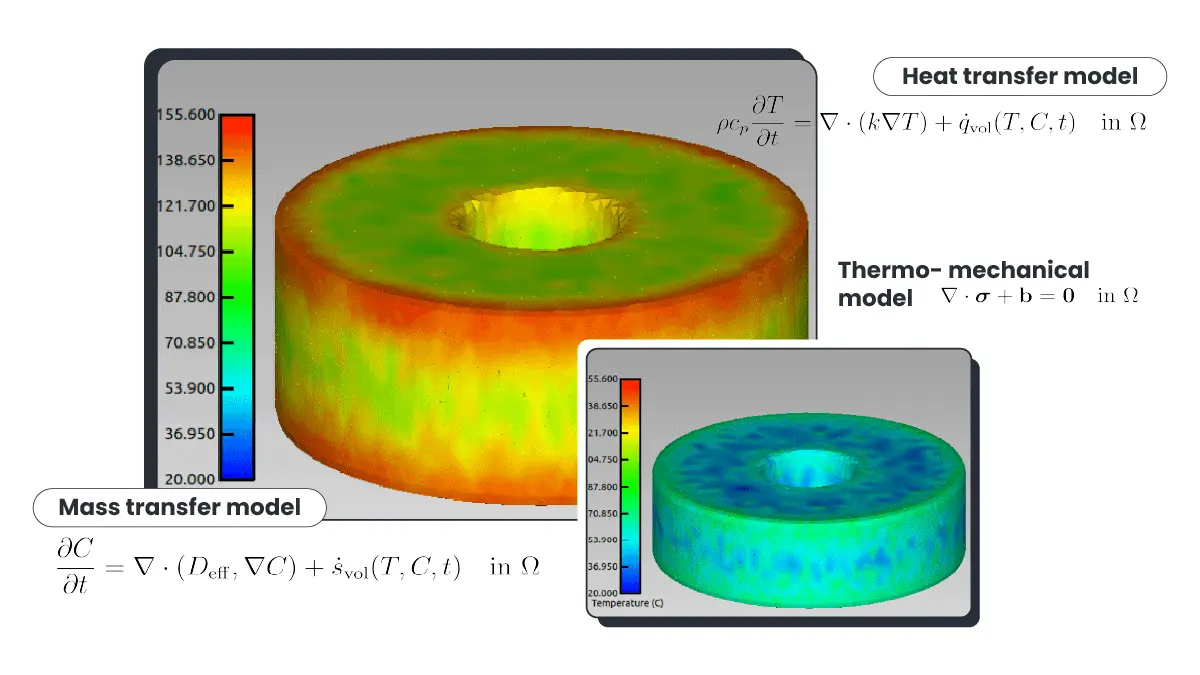
Maps moisture migration and Maillard browning. Ensures uniform structure at scale across oven configurations.
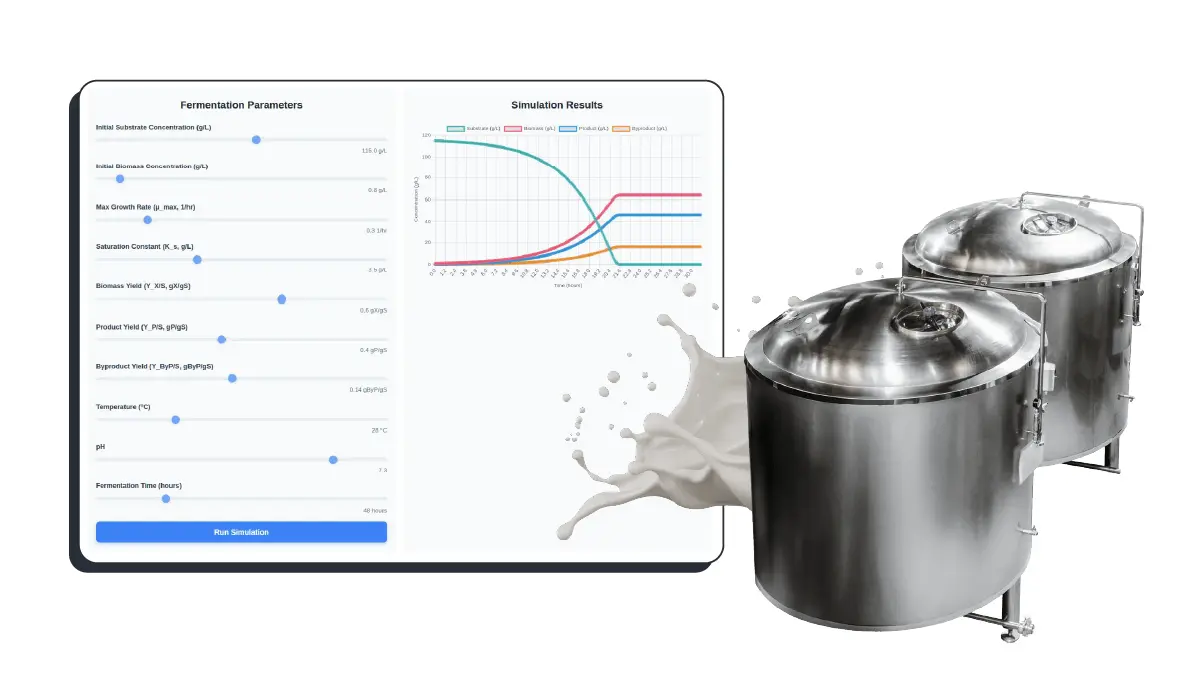
Models biomass growth and metabolite production. Optimizes yield and batch consistency across fermentation conditions.
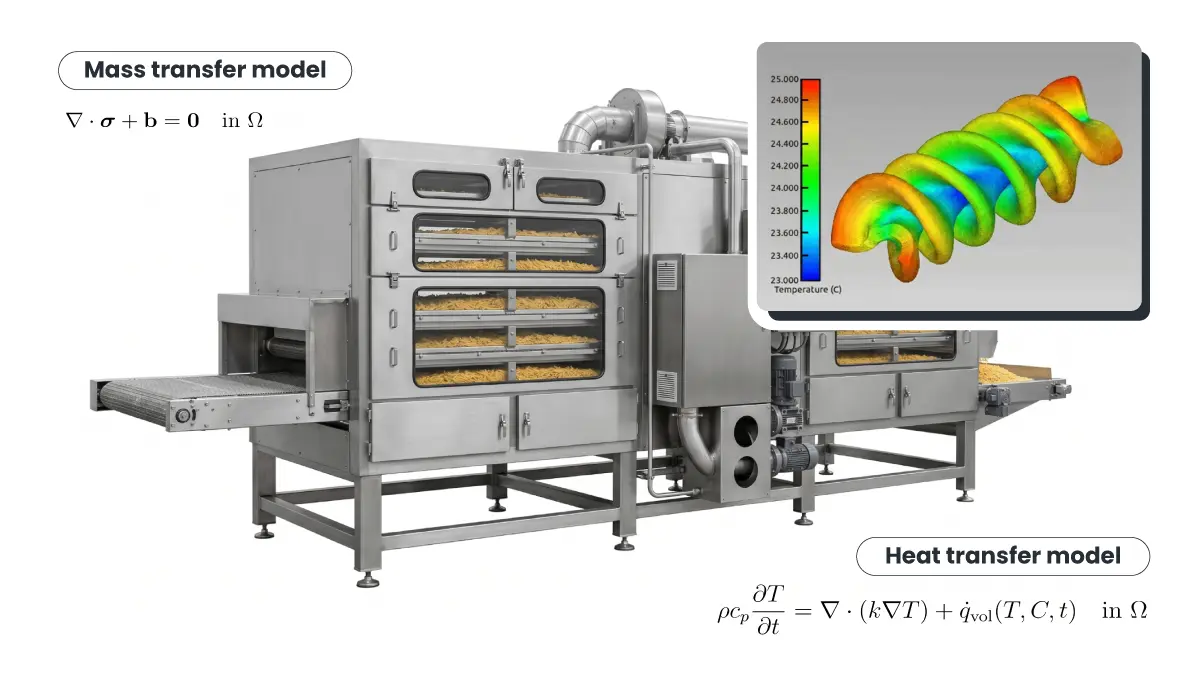
Heat and mass transfer for spray, drum, and belt drying.
FIOS® is in active deployment with global CPG teams across snacks, dairy, nutraceuticals, and supplements. Here’s what “faster, cheaper, better” looks like in numbers.

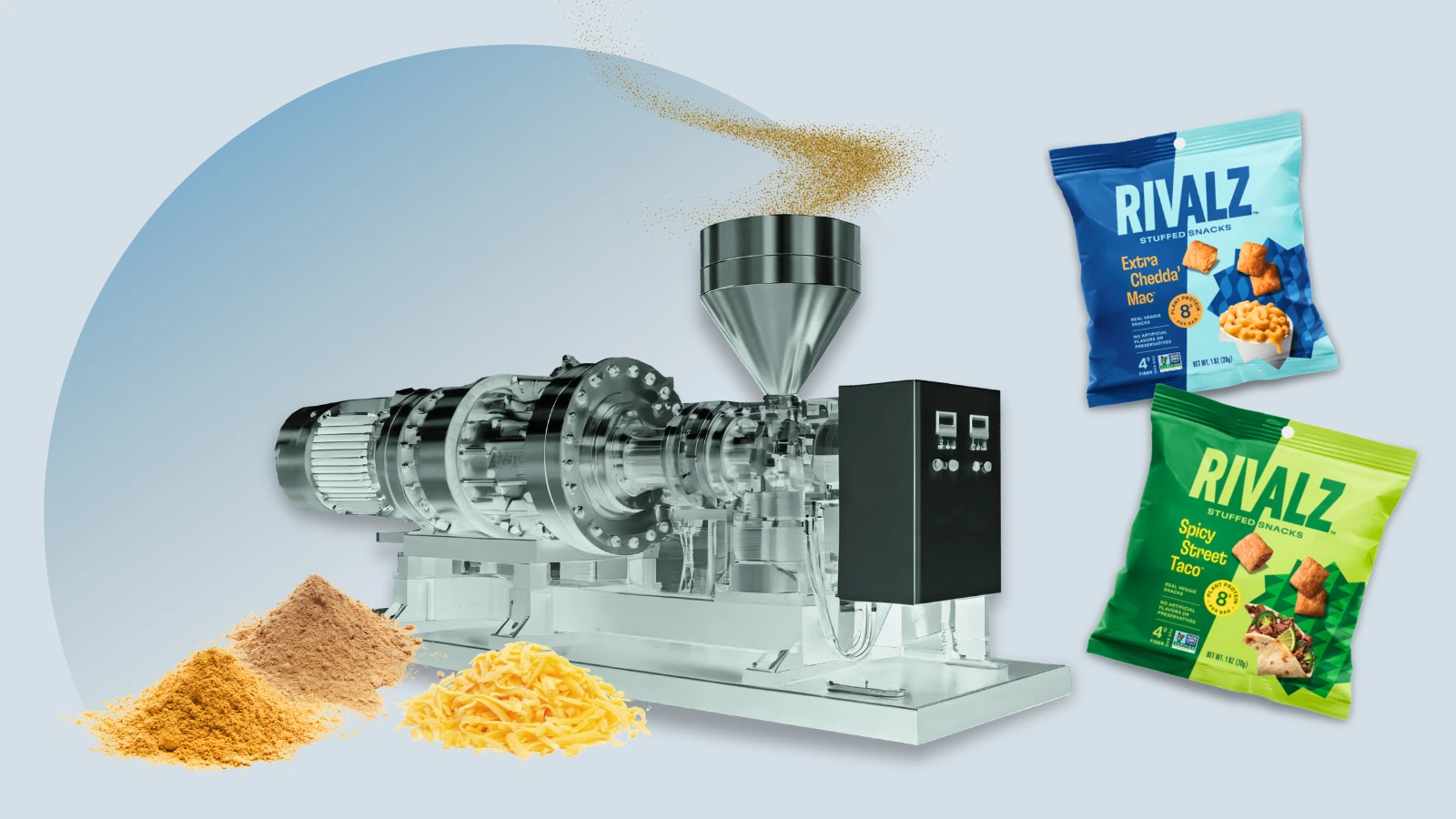
Security, deployment, and integration are built in from the start. FIOS® already operates inside enterprise environments at some of the world’s most demanding CPG companies, meeting the procurement standards that come with them.